

Last updated: December 2025 | Based on The Advertising (Less Healthy Food Definitions and Exemptions) Regulations 2024 and ASA guidance published 5 December 2025
Introduction
The UK's new restrictions on online advertising for less healthy food and drink come into force on 5 January 2026. For hospitality businesses, this represents a significant shift in how you can promote your venues, menus, and partnerships with creators.
Understanding what's restricted, what's exempt, and where the boundaries lie will help you stay compliant while continuing to market effectively.
This guide covers:- Paid social ads, boosted posts, and display advertising
- Local search ads on Google Maps and Bing Places
- Promoted listings on Deliveroo, Uber Eats, Just Eat, OpenTable,Tripadvisor etc.
- Influencer and creator partnerships, including gifted collaborations
- TV and on-demand advertising, which have separate rules with a 9pm watershed
- The detailed nutrient profiling science — for that, see the CDRC calculator linked in Section 3
Our sources
Throughout this guide, we draw on two primary documents. The first is the legislation itself: The Advertising (Less Healthy Food Definitions and Exemptions) Regulations 2024, which defines restricted products, sets out how to count employees, and establishes the exemptions. The second is the ASA's enforcement guidance, which explains how the rules will be applied in practice, including what counts as "paying" for advertising and what records you should keep. Where we cite specific provisions, we reference these as "Regulation 4" or "ASA guidance 6.3" respectively.
We distinguish between what the legislation requires and how the ASA says it will enforce. Where there is room for interpretation, we have noted this and offered practical guidance, but these areas may benefit from specific legal advice.
HFSS vs "less healthy"You will see both terms used in industry discussions, but they are not interchangeable under these rules. A dish can score as HFSS under the nutrient profiling model but still fall outside the restrictions if it is not in one of the 13 regulated product categories. Grilled steak, for example, is not restricted regardless of its fat content. Chips, pizza, burgers in buns, and most desserts typically are. Section 3 sets out the full category list and explains how to assess your menu.
This guide is for informational purposes only and does not constitute legal advice. While we have taken care to ensure accuracy based on the legislation and ASA guidance available at the time of writing, you should consult a qualified solicitor for advice on your specific circumstances. Regulations and enforcement approaches may change. Check the ASA website for the latest guidance.
Executive Summary
From 5 January 2026, the UK restricts paid online advertising for less healthy food and drink products. This summary sets out the key points; each is covered in detail in the relevant section of the guide.
The restriction applies 24 hours a day. Unlike TV advertising, there is no watershed online. Paid social ads, Google display, local search ads, promoted listings on delivery and booking platforms, and paid influencer partnerships are all in scope at all times.
Businesses with fewer than 250 employees are exempt. This SME exemption is a significant carve-out that covers most independent restaurants and smaller groups. However, you need to count all staff, including international employees and franchisees, and document your status on the first day of each financial year. Section 1 explains how to assess and evidence your eligibility.
Only 13 product categories are restricted. The restrictions do not apply to all food. They target specific categories that score as less healthy under the nutrient profiling model: pizza, potato products, breaded and battered products, sandwiches (including burgers in buns), desserts, and sugary drinks, among others. Grilled steaks, pasta, curries, salads, and unsweetened drinks are outside scope entirely. Section 3 sets out the full list and explains how to assess your menu.
Your own channels are not restricted. You can post on your Instagram, TikTok, or website, including less healthy products, and you can commission creators to produce content for those channels. The restriction only applies when you pay for placement on someone else's platform. Owned content still needs to comply with existing CAP Code rules on HFSS content and targeting, as well as influencer disclosure requirements.
Brand advertising is exempt. You can run paid ads promoting your venue, atmosphere, service, and overall experience, provided they do not feature specific less healthy products. Focusing on venue, guests, and team keeps you out of scope. Section 4 covers the brand exemption in detail.
Gifted collaborations count as paid advertising. A free meal in exchange for a post is considered "paying" under these rules. If you work with creators, you will need clear briefs, acknowledgment workflows, and approval processes. Section 5 explains how to structure compliant partnerships.
Platforms will enforce independently. Meta, TikTok, and Google will review content against the new rules, just as they already do for alcohol and gambling. Ads may be rejected before they run or removed mid-campaign. For creator content, if something is flagged, the creator may need to appeal.
The rules take effect on 5 January 2026. Section 8 provides a checklist to help you prepare.
1. Do These Rules Apply to You?
The restrictions apply to businesses with 250 or more employees. If you have fewer than 250, you are exempt, though you will need to be able to demonstrate this if challenged.
This threshold will be familiar to hospitality businesses. It is the same 250-employee rule that has applied to calorie labelling since April 2022, so if you already know your status for menu labelling, the same applies here.
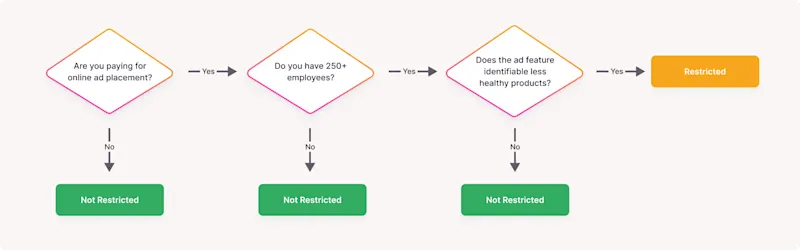
The 250-employee threshold
You check your employee count on the first day of your financial year, and that number determines your status for the entire year ahead. The ASA or advertising platforms may query your eligibility, so keep documentation available that you can produce if asked.
How to count employees
The regulations count people, not full-time equivalents. A part-time employee counts the same as a full-time one. Under the 2024 Regulations (Regulation 4), an "employee" means anyone who has entered into or works under a contract of employment.
Include in your count:- All UK employees, whether full-time or part-time
- All international employees — the regulations explicitly include staff outside the UK (Regulation 4(2)(b))
- Franchisee staff, if you're a franchisor — franchise businesses are treated as part of the franchisor's business (Regulation 4(2)(a))
- Individuals employed by associated companies who work for your business (Regulation 4(6)(d))
When to count: The first day of your financial year. This single date locks in your status for the year, so get it right and document it.
Restaurant groups and complex structures
For groups operating multiple brands, the key question is which entity is paying for the advertising. The SME exemption applies to the entity that pays, and the headcount is assessed at that entity level.
If your central marketing team places ads for all your brands, the parent company's total employee count applies, even if individual brands are small. However, if a brand operates as a genuinely separate company and pays for its own advertising from its own budget, only that entity's headcount is relevant.
Example scenarios:- Parent group central marketing runs ads for Brand A: The group's total headcount applies (e.g., 4,000 employees) — not exempt
- Brand A Ltd (a separate company with fewer than 250 staff) pays for its own ads: Only Brand A Ltd's headcount applies — exempt
- Franchisee pays for local ads: The franchisor's total headcount applies — see Franchise businesses below
- Independent restaurant with 80 employees pays for ads: 80 employees — exempt
For a brand to be assessed separately, it needs to be a genuine separate entity: registered at Companies House as its own limited company, with its own employees on its own payroll, paying for advertising from its own budget. If it is simply a trading name of the parent, the parent's full headcount applies.
Franchise businesses
Franchise businesses are treated as part of the franchisor's business under the regulations, not as separate entities. This is explicit in the 2024 Regulations (Regulation 4(2)-(5)) and applies whenever the franchisor controls the food or drink provided, the appearance of the premises, or the business model.
What this means in practice:- If the franchisor pays for national advertising, the franchisor's employee count applies
- If a franchisee places their own local advertising, the franchisee's staff are still counted as part of the franchisor's total — so the whole system's headcount applies
- If you're a franchisee, check with your franchisor whether the franchise system as a whole exceeds 250 employees
There is an exception for pubs: the franchise rules do not apply if the agreement is limited to alcoholic drinks and the franchisee controls what other food or drink is provided (Regulation 4(5)). This carve-out is relevant for some pub tenancy arrangements where the tenant has freedom over the food menu.
International employees
If you have staff outside the UK, they count too. The regulations are explicit: "persons employed for the purposes of the business in a country or territory outside the United Kingdom are to be taken into account" (Regulation 4(2)(b)).
A business with 150 UK employees and 100 international employees has 250 employees under these rules, placing it right at the threshold.
Advertising on delivery platforms
You can use the SME exemption when paying for sponsored listings on Deliveroo, Uber Eats, or Just Eat, even though those platforms themselves have far more than 250 employees. What matters is the advertiser, meaning the person paying for the specific ad. If you are an SME paying for a promoted listing for your restaurant, the exemption applies to that listing.
However, if the delivery platform runs its own advertising campaigns that happen to feature your restaurant's products, the situation is different. In that case, the platform is the advertiser, and the exemption would not apply to those ads.
Quick reference
| Your situation | Whose headcount applies |
Independent restaurant | Your employees only |
Restaurant group with central marketing | The group's total |
Franchise business | Franchisor's total, including all franchisees |
Pub with alcohol-only franchise | May count separately if you control the food menu |
UK business with international staff | UK + international combined |
SME paying for delivery platform listings | Your headcount — SME exemption applies |
The brand exemption, which allows you to run paid ads that promote your brand without featuring specific products, is covered in Section 4.
Documenting your SME status
If you are relying on the exemption, keep evidence. The ASA guidance is clear that you should be able to produce proof of eligibility if investigated.
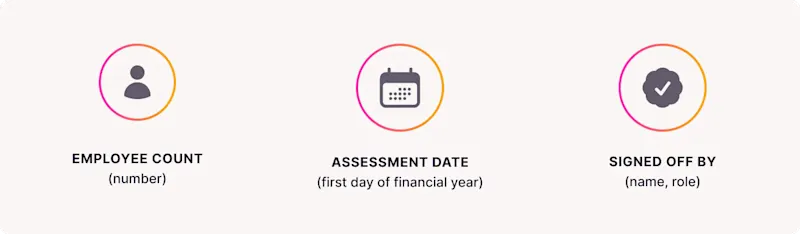
"Any enterprise relying on the SME exemption should keep evidence of its eligibility available, in the event that the ASA investigates an advertisement's compliance with the rules." — ASA Guidance, Section 5.1.3
Set a calendar reminder for the first day of your financial year. Check your headcount, document it, sign it off, and file it. This straightforward process establishes your status for the entire year.
2. What's Restricted and What's Not
The rules restrict paid advertising for identifiable less healthy products. They do not affect your own channels, content you commission for those channels, or paid brand advertising that does not feature specific products. Understanding these boundaries is key to staying compliant.
The core rule
"Persons must not pay for advertisements for an identifiable less healthy food or drink product to be placed on the internet." — CAP Code Rule 15.19
This prohibition comes from section 368Z14 of the Communications Act 2003, with the specific products defined in the 2024 Regulations. The restriction applies 24 hours a day. Unlike TV, there is no watershed online.
"Paying" is defined broadly. It includes any consideration, whether monetary or non-monetary: cash payments, gifted products or services (including free meals), reciprocal arrangements, and sponsorship agreements. A free meal in exchange for a social post counts as paying under the rules. Section 5 covers influencer partnerships in detail.
What's restricted
When you pay for placement featuring identifiable less healthy products (meaning a typical viewer would recognise the ad is for that product; brief or background appearances usually do not qualify), you are in scope:
- Paid social ads on Meta, TikTok, and YouTube
- Boosted posts on any platform
- Google and programmatic display ads
- Local search ads on Google Maps and Bing Places
- Meta Partnership Ads and Branded Content Ads (boosting a creator's post via the partnership tool)
- TikTok Spark Ads (promoting a creator's post as an ad from their handle)
- Whitelisting and dark posting from a creator's handle
- Paid influencer partnerships (see Section 5)
- Gifted collaborations where a free meal leads to a post (see Section 5)
- Sponsored listings on Deliveroo, Uber Eats, and Just Eat
- Promoted listings on OpenTable, Resy, TheFork, Tripadvisor, and Booking.com
What's not restricted
These channels and activities remain completely available to you:
- Organic posts on your own channels: no payment for placement
- Content you commission for your own channels: you're paying for creation, not placement
- Paid brand advertising that doesn't feature specific less healthy products (see Section 4)
- Email marketing: direct communication with your customers
- Your website: owned media you control
- Standard product listings on delivery and booking apps — not paid advertising
These remain subject to the CAP Code (including HFSS content/targeting rules and influencer disclosure where applicable). Email marketing must also comply with the Privacy and Electronic Communications Regulations (PECR) and the UK General Data Protection Regulation (UK GDPR).
The three exemptions
Three exemptions carve out significant territory from the restrictions.
The SME exemption means businesses with fewer than 250 employees are not covered. This is a major carve-out, and most independent restaurants qualify. However, you need to be able to demonstrate your status if challenged, so document your headcount annually. Section 1 explains how to count employees.
Your own channels are not restricted because you are not paying for placement. You can post on your Instagram, TikTok, website, or app, including less healthy products, and you can commission creators to produce content for your channels. The critical point is that the moment you boost a post, it becomes paid advertising and the rules apply. Section 4 covers this in more detail.
The brand advertising exemption means you can run paid ads promoting your venue, atmosphere, service, and overall experience, provided they do not feature specific less healthy products. For hospitality businesses, this keeps experience-led campaigns fully available. Section 4 explains how to use this exemption effectively.
You're responsible
The ASA is clear on this point: you are responsible for your own compliance, regardless of who else is involved in creating or placing the advertising.
"Advertisers are responsible for ensuring their own compliance with the online rule." — ASA Guidance (Section 5.5.2)
Using intermediaries does not change this. The ASA explicitly acknowledges that advertisers typically work through agencies and publishers, but states that "the advertiser will be held responsible for securing compliance" (ASA Guidance, Section 6.3.4).
| Scenario | You | Third party |
Media agency runs campaign featuring restricted products | ✓ Accountable | ✗ Not accountable |
Creator platform manages influencer partnerships | ✓ Accountable | ✗ Not accountable |
Creator goes off-brief and features restricted products | ✓ Accountable | ✗ Not accountable |
Sponsored listing on delivery/booking platform | ✓ Accountable | ✗ Not accountable |
Documentation showing what instructions you gave demonstrates good faith, and that matters when the ASA assesses outcomes. Creators also have their own CAP Code responsibilities for their marketing communications, including disclosure and avoiding HFSS appeal to under-16s.
What the ASA will look at
The ASA considers advertisements on a case-by-case basis, either following a complaint or through its own monitoring (ASA Guidance, Section 3.4.3). It does not review every campaign proactively.
If the ASA does investigate, it will consider the arrangements you had in place. Their guidance states they will "have regard to underlying contractual arrangements between the party paying for an advertisement and others involved in its preparation and publication" (ASA Guidance, Section 6.3.7).
This means your processes matter if a question arises. The ASA will look at:
- Briefs: Did you specify what could and couldn't be featured?
- Contracts: Did you include compliance terms?
- Approvals: Did you review content before it went live?
- Records: Can you prove what instructions were given?
When these are in place, you have demonstrated reasonable steps. Good documentation will not guarantee you avoid a ruling if something went wrong, but it shows good faith, and that influences how the ASA treats you.
See Section 5 for detailed guidance on influencer processes.
3. Is Your Product "Less Healthy"?
The restrictions do not apply to all food. They target 13 specific product categories. Many dishes served in restaurants, pubs, and cafes fall outside these categories entirely. Grilled steaks, fish, pasta, curries, salads, and plain coffee are all outside scope. For items that do fall within the categories, you have two compliant paths: feature dishes outside the categories, or focus on your venue and experience.
The two-part test
A product is only classified as "less healthy" if it fails both parts of a two-part test set out in the 2024 Regulations (Regulation 3(1)).
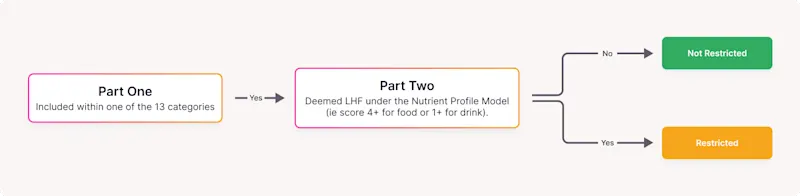
Both parts must be satisfied. If a product is not in one of the categories, it is outside scope regardless of its nutritional content. A ribeye steak may be high in saturated fat. A carbonara may be loaded with cream and cheese. Neither falls within any of the defined categories, so neither is restricted.
The 13 regulated categories
The 2024 Regulations (Schedule) define the categories. For hospitality, the most relevant are Categories 11, 12, and 13.
| Category | What's included |
1. Soft drinks with added sugar | Sugary sodas, sweetened juices |
2. Savoury snacks | Crisps, pretzels, poppadums, salted popcorn, prawn crackers (not nuts) |
3. Breakfast cereals | Ready-to-eat cereals, granola, muesli, porridge oats |
4. Confectionery | Chocolates and sweets |
5. Ice cream and frozen desserts | Ice cream, ice lollies, frozen yoghurt, water ices |
6. Cakes and cupcakes | All cakes and cupcakes |
7. Sweet biscuits and bars | Biscuits, nut/seed/cereal bars |
8. Morning goods | Croissants, pastries, pancakes, waffles, scones, Danish pastries |
9. Desserts and puddings | Pies, tarts, cheesecake, dairy desserts, crumbles, custards |
10. Sweetened yoghurt | Sweetened yoghurt and fromage frais |
11. Pizza | All pizza (except plain bases) |
12. Potato products | Chips, fries, wedges, roast potatoes, hash browns, croquettes |
13(a). Ready meals | Products marketed as ready for cooking/reheating, intended as a complete meal |
13(b). Menu-ordered complete meals | Bundled meal deals intended as a complete meal (see below) |
13(c). Products in sauce | Products in sauce marketed as ready for cooking/reheating |
13(d). Breaded or battered products | Fish fingers, chicken nuggets, fried chicken, battered fish |
13(e). Sandwiches | Burgers in buns, wraps, baguettes, toasties, paninis |
Category 13 is the most complex and most relevant for hospitality — particularly 13(b), 13(d), and 13(e).
What's not in the categories
The categories target products most associated with childhood obesity: snacks, sugary drinks, fast food staples, and convenience foods. They're about specific product types, not nutritional content alone.
These dishes are outside the categories entirely and can be featured freely in paid advertising:
| Dish type | Examples |
Grilled, roasted, or smoked meats | Steaks, chicken breasts, lamb chops, roast dinners |
Fish and seafood (not battered) | Grilled salmon, prawns, mussels, oysters |
Pasta dishes | Carbonara, bolognese, lasagne, risotto |
Curries and stews | Thai curries, Indian curries, tagines, casseroles |
Noodle dishes | Pho, ramen, pad thai, laksa |
Rice dishes | Biryani, fried rice, paella |
Mexican dishes | Tacos, burritos, enchiladas |
Salads and grain bowls | Any salad or grain-based bowl |
Soups | All soups |
Vegetable dishes | All vegetable sides and mains |
Plain bread | Rolls, garlic bread, focaccia |
Plain coffee and tea | Americano, flat white, tea |
Alcoholic drinks | Beer, wine, spirits (without added sugar) |
These examples remain outside scope provided they are not depicted as part of a bundled "complete meal" or otherwise brought into scope by how the ad presents them.
Nutrient profiling
If a product falls within one of the 13 categories, the second question is whether it scores as "less healthy" under the DHSC 2004-05 nutrient profiling model. The model scores products per 100g, awarding negative points for energy, saturated fat, sugar, and sodium, and positive points for fruit and vegetable content, fibre, and protein.
Food scoring 4 or more points is "less healthy." Drinks scoring 1 or more points are "less healthy."
For most hospitality businesses, the priority should be category first. If a dish is not in one of the 13 categories (grilled steak, pasta, curry), you do not need to calculate a score. It is outside scope regardless of its nutritional content.
For items that are in a category and you want to check the score, the CDRC Nutrient Profiling Model Calculator provides a free tool.
Nutrient profiling in practice
Calculating a score requires specific data: energy, saturated fat, sugar, sodium, fibre, protein, and fruit or vegetable content per 100g. Packaged goods companies have this for every product because it is on the label. For hospitality businesses, the situation is different.
Dishes prepared in-house often do not have detailed nutritional breakdowns. Getting this data means either detailed recipe analysis or laboratory testing, both of which take time and money.
You have a few options:
- Invest in nutritional analysis for key dishes, particularly signature items you want to prove pass the threshold
- Treat all category items as restricted and focus paid advertising on dishes outside the 13 categories
- Use conservative assumptions and only feature category items where you're confident they pass
The ASA guidance (Section 4.3.2) says you should have information available to demonstrate the status of your products if investigated. For items outside the categories, this is straightforward because category alone determines they are out of scope. For items within categories, being able to show a passing score, or documenting your decision to treat them as restricted, is prudent.
Drinks have a stricter threshold
The threshold for drinks is significantly stricter: just 1 point makes a drink "less healthy," compared to 4 points for food.
This catches people out. A caramel latte, a sugary iced coffee, or a flavoured milkshake will likely fail, even with a relatively low score. Plain coffee and tea are fine. It is the syrups, added sugar, and flavourings that push drinks over the threshold.
Complete meals — Category 13(b)
Category 13(b) is the trickiest for hospitality. The legislation defines it as:
"products ordered from a menu, which by themselves, or together with other products ordered from the same menu, are intended to be consumed as a complete meal"
The key question is whether the product is marketed or sold as a complete meal, not whether the customer happens to eat multiple items together.
What's restricted:- Meal deals and combos — items bundled as a single menu offering ("Burger, Fries & Drink £12.99")
- Children's meal bundles — nuggets, chips, and a drink packaged as one product
- Takeaway meal boxes — where rice, naan, or sides are included as part of the product
- Separately ordered items — a steak from mains and chips from sides are two distinct products
- À la carte dining — where customers build their own meal from separate menu items
A burger chain selling a "Meal Deal" as a single menu item is restricted under Category 13(b). A restaurant where customers order a burger from mains and chips from sides as separate line items has two products: the burger assessed on its own merits, and the chips restricted under Category 12 as potato products.
In plain terms: bundled "meal deal" items count as a complete meal; separate menu items ordered à la carte do not.
Where items are priced and ordered separately (à la carte mains plus optional sides), they are less likely to be treated as one "complete meal" product, though individual components may still fall into other restricted categories (for example, chips in Category 12, burgers in Category 13(e)).
Because this is fact-sensitive, keep records (screenshots) of how the offer is described on menus, apps, and in any ad creative. If you are uncertain whether your menu structure qualifies, seek legal advice.
Other Category 13 sub-categories
13(a) Ready meals target supermarket convenience products — things marketed as ready for cooking or reheating, intended as a complete meal. Freshly prepared restaurant dishes aren't restricted here.
13(c) Products in sauce similarly target convenience products — a jar of curry sauce with chicken, not a freshly made curry.
13(d) Breaded or battered products catch fried chicken, battered fish, chicken nuggets, and similar products regardless of how they're sold. This is one of the most relevant sub-categories for hospitality.
13(e) Sandwiches catch any sandwich: baguettes, wraps, bagels, filled buns (including burgers), toasties, and paninis.
Common hospitality scenarios
Each item in an advertisement is assessed individually. Here's how common dishes are classified:
| Dish | Category | Restricted? |
Steak with vegetables | Neither in any category | No |
Steak with chips | Steak not in category; chips in Category 12 | Chips likely restricted |
Fish and chips | Fish in 13(d); chips in Category 12 | Both likely restricted |
Grilled fish with salad | Neither in any category | No |
Burger (no meal deal) | Sandwich under 13(e) | Likely restricted |
Burger meal deal | Complete meal under 13(b), plus 13(e) and 12 | Restricted |
Fried chicken | Breaded/battered under 13(d) | Restricted |
Grilled chicken breast | Not in any category | No |
Pasta carbonara | Not in any category | No |
Sunday roast | Roast meat not in category; roast potatoes in Category 12 | Potatoes may be restricted |
Curry with rice | Neither in any category | No |
Ramen or pho | Not in any category | No |
Pizza | Always Category 11 | Restricted (subject to score) |
What ends up "in shot" vs what's "featured"
For video content, the practical question is whether a restricted item is the focus of the shot or simply happens to be visible. The ASA guidance (Section 8.2.2) explains that prominence is assessed by considering positioning (foreground versus background), duration, and how attention is drawn to the product.
Incidental appearances are unlikely to trigger the restrictions. The guidance specifically mentions "food or drink products on tables in a restaurant" as an example of references that are unlikely to be restricted.
The key distinction:"Imagery of less healthy products that people are unlikely to be able to recognise when viewing an advertisement in real time are unlikely to meet the identifiability test. This could be because the product is shown very briefly in the advertisement, or because it is in the background of an advertisement resulting in it not being discernible." — ASA Guidance, Section 8.2.2
| Scenario | Assessment |
Chips visible on the table while creator talks to camera | Fine — incidental background |
Wide shot of venue with other diners' plates visible | Fine — incidental background |
Creator picks up a chip and eats it on camera | Risky — engaging with the product draws attention |
Close-up shot of the chips | Restricted — clearly featured |
The act of engaging with a product, such as picking it up, eating it, or commenting on it, moves it from incidental to featured.
As a working rule for hospitality teams and creators: if a product is the "hero" of the shot or is interacted with, treat it as identifiable. Background plates in wide venue shots are generally lower-risk. When in doubt, keep restricted items out of frame and avoid interaction shots.
Two compliant paths
You have two compliant paths for paid advertising, and most businesses will use both.
Path 1: Lead with dishes outside the categories. Feature items that aren't in the 13 regulated categories. Grilled steaks, fish, pasta, curries, salads, vegetable dishes, unsweetened drinks are all available for paid ads
Path 2: Lead with experience. The brand advertising exemption allows you to run paid ads promoting your venue, atmosphere, service, and brand identity, provided you are not featuring specific less healthy products. Section 4 explains this in detail.
You do not need to change your menu. The approach is to be strategic about what you feature in paid advertising. Feature your grilled dishes, pasta, or salads. Or focus on venue and atmosphere. Both paths are fully compliant.
Reformulation is an option
Being in a category is not permanent. The nutrient profiling score depends on how the product is made.
Traditional preparation choices such as frying oils, salt levels, and breading formulations can materially change scores. The category is "potato products," but whether your chips pass depends on your recipe.
For larger operations, this may be worth considering. Switching oils, reducing salt, or adjusting recipes can move products from restricted to compliant. If a signature dish is borderline, it may be worth testing, particularly if you want to feature it in paid advertising.
For detailed scoring information, use the CDRC Nutrient Profiling Model Calculator or consult the DHSC Nutrient Profiling Technical Guidance.
Know your menu
If you are running paid advertising regularly, document which menu items fall into which category. This serves two purposes.
First, it makes planning easier. When you know which dishes are available to feature, you can brief your marketing team, agencies, and creators with specific guidance: "Feature the ribeye, the grilled salmon, or any of the salads. Avoid the burger, the fish and chips, or the loaded fries." Clear lists lead to fewer mistakes.
Second, it creates a record. If a campaign is ever questioned, you can demonstrate that you assessed your menu and briefed accordingly. The ASA expects you to be able to show you have made appropriate assessments of your products.
This does not need to be complicated. A simple internal document listing your menu items by status ("available to feature," "restricted," "check specifics") gives your marketing team, agencies, and any creators you work with a clear reference. For larger operations with multiple venues or changing menus, tools that track this centrally become more valuable. Section 6 covers this further.
4. Your Brand Channels and the Brand Exemption
The restrictions target paid advertising for identifiable less healthy products. Significant territory remains available: your own channels are completely unrestricted, content you commission for those channels is fine, and paid brand advertising that does not feature specific products is exempt. This section explains what you can still do.
Your own channels
Your social media accounts, website, app, and email list are not restricted. You can post whatever you want, including less healthy products, because there is no payment for placement.
The restriction (CAP Code rule 15.19) prohibits paying for advertisements to be placed on the internet. When you post on your own Instagram, you're not paying Instagram to show it. You control the channel. No payment for placement means no restriction.
This applies to your Instagram, TikTok, Facebook, X, YouTube, website, app, and email marketing. On these channels, you can post any content you like.
"Rule 15.19 will not apply to advertisers' own marketing communications appearing on their own websites... or in other non-paid-for space online under their control such as marketers' own social media channels or apps where no payment for the placement of an advertisement is involved." — ASA Guidance (Section 6.3.5)
Owned content remains subject to the rest of the CAP Code, including HFSS content and targeting rules, and influencer disclosure requirements where relevant.
Content you commission for your channels
If you pay a creator or agency to make content that appears on your channels only, that is not restricted either. You are paying for content creation, not placement. The content goes on your channel, which you control.
"If an influencer is paid by an advertiser to create and/or feature in an advertisement that will be posted on the advertiser's own social media channels, it is unlikely to be within scope because placement of the advertisement has not been paid for." — ASA Guidance (Section 6.3.6)
This is significant. You can hire creators to produce content for your channels featuring any dishes you want, including your signature burger, loaded fries, or any other restricted product. The restriction is about paying for placement on someone else's platform, not paying for content creation.
What you can feature in paid ads
When you do pay for placement through paid social ads, boosted posts, Google display, or sponsored delivery listings, two paths remain available.
Path 1: feature dishes outside the categories. Many items on your menu are not in the 13 regulated categories. Grilled meats, fish, pasta, curries, salads, rice dishes, noodles, vegetables, and unsweetened drinks are all fine in paid ads regardless of their nutritional content. Section 3 provides the full breakdown.
Path 2: Brand advertising. The Brand Advertising Exemption Regulations 2025 exempt advertisements that promote your brand without depicting specific less healthy products. For hospitality, this means venue shots, atmosphere, your team, and the customer experience are all exempt.
A paid ad showing your restaurant interior, happy customers, your team, or your grilled salmon is not restricted.
What if your brand is named after a dish? If your restaurant name is also the name of a less healthy product ("The Burger Joint," "Pizza Palace"), you can still use the brand exemption, provided your business was established before 16 July 2025 (Brand Exemption Regulations 2025, Regulation 2(6)(a)).
Boosting changes everything
The moment you boost a post, it becomes paid advertising.
An organic post on your Instagram showing your signature burger is fine because it is your channel and there is no payment for placement. Boost that same post and it becomes paid advertising. The rules apply.
Before boosting any post, consider whether it features identifiable less healthy products. If it does, either do not boost it or edit the content first.
Quick reference
| Channel or activity | Restricted? |
Organic posts on your channels | No |
Content commissioned for your channels | No |
Paid ads featuring dishes outside the 13 categories | No |
Paid brand advertising (venue, experience, no specific LHF products) | No |
Boosted posts featuring identifiable less healthy products | Yes |
Paid ads featuring identifiable less healthy products | Yes |
Your own channels remain completely unrestricted. The rules apply when you pay for placement featuring identifiable less healthy products.
5. Influencer and Creator Partnerships
The restrictions apply to paid placement of content featuring identifiable less healthy products, and "paid" includes non-monetary consideration like free meals. If you work with creators, you need to understand how the rules apply and what processes to put in place.
Why these rules apply to creator content
"Paying" includes non-monetary consideration. A free meal counts as payment under these rules. If there is an arrangement, explicit or implied, for a creator to post content in exchange for that meal, it is treated the same as paying them cash.
The typical hospitality model of inviting a creator, comp’ing their meal, and expecting them to post about it involves consideration (the free meal) and an arrangement (the expectation they will post). That is paid advertising under the rules.
"'Paying' includes providing any consideration, whether monetary or non-monetary. This is likely to include reciprocal and affiliate relationships and arrangements such as the gifting of products or services." — ASA Guidance (Section 6.3.2)
What counts as an "arrangement"
The ASA will look at whether there was an understanding that content would be posted in exchange for the benefit provided. This is the critical distinction.
| Scenario | Arrangement? | Restricted? |
Creator visits, pays own bill, posts organically | No | No |
Creator invited, no posting expectation, posts anyway | No | No |
Creator invited with implied expectation to post | Yes | Yes |
Creator invited, explicit agreement to post | Yes | Yes |
Creator paid fee to post on their channel | Yes | Yes |
Creator paid to create content for your channel | Yes | No (safe harbour) |
The line is this: if there is consideration (money, free meal, product) and an understanding that content will be posted on their channels, it is restricted.
What's restricted and what's not
| Collaboration type | Restricted? | Why |
Paid partnership (fee + they post on their channel) | Yes | Paying for placement |
Gifted collaboration (free meal + they post) | Yes | Non-monetary consideration for placement |
Affiliate links or tracking codes | Yes | Reciprocal arrangement = consideration |
Content for your channels (fee + they create, you post) | No | Paying for content, not placement |
Organic post (no arrangement, no consideration) | No | No payment, no arrangement |
Affiliate links and tracking codes count as consideration even without an upfront fee. If a creator uses a trackable link, discount code, or earns commission on referrals, the reciprocal arrangement counts as "paying" under the rules.
PR events and seeding depend on whether there is an "arrangement." If creators are invited with an understanding, explicit or implied, that they will post, it is restricted. If there is genuinely no posting expectation and some happen to post organically, it is likely not restricted. However, this is harder to demonstrate when everyone invited is a creator.
The safe harbour: content for your channels
If you pay a creator to make content that goes on your channels, not theirs, it is not restricted. You are paying for content creation, not placement. This is explicitly carved out in the ASA guidance.
"If an influencer is paid by an advertiser to create and/or feature in an advertisement that will be posted on the advertiser's own social media channels, it is unlikely to be within scope because placement of the advertisement has not been paid for." — ASA Guidance (Section 6.3.6)
You can hire creators to produce content for your Instagram, TikTok, or YouTube featuring any dishes you want, because you control where it is posted. Owned and commissioned content still needs to comply with the CAP Code, including HFSS content and targeting rules, and disclosure requirements (#ad or #gifted) where applicable.
Two compliant paths for creator content on their channels
When creators are posting on their own channels as part of a paid or gifted collaboration, you have two compliant paths.
Path 1: Feature dishes outside the 13 categories. Many dishes aren't in the regulated categories. Grilled steaks, fish (not battered), roast meats, salads, pasta, curries, noodles, vegetables, plain coffee, wine, beer, and spirits are not restricted. Section 3 provides the full list.
Path 2: Experience-focused content. Focus on venue, atmosphere, service, and brand identity without featuring specific less healthy products. The brand advertising exemption applies to creator content too. See Section 4.
How to brief creators
Do not assume creators know the rules. Spell out what they can and cannot feature.
- Be explicit. Name specific dishes they can feature and specific dishes to avoid. Vague briefs could lead to problems.
- Use framing to your advantage. The rules apply to what is identifiable in the content, not what the creator orders or eats. They can order whatever they want. The brief is about what ends up in the final video: "Close-up of the steak is fine, just keep the chips out of frame."
- Understand incidental vs featured. Food visible on a table in the background is different from food being picked up, eaten, or commented on. The act of engaging with a product moves it from incidental to featured.
- Get acknowledgement in writing. Require creators to confirm they have read and understood the brief before they start. Record when the brief was sent and acknowledged.
- Review before posting. Where possible, review content before it goes live. This catches issues before they become problems and demonstrates you had oversight.
If they go off-brief
You remain responsible. The ASA is clear: "Advertisers are responsible for ensuring their own compliance with the online rule" (Section 5.5.2). Using creators does not transfer that responsibility.
If a creator features your loaded fries despite being told not to, you are still accountable as the party providing consideration. Documentation helps because it shows you gave clear instructions and demonstrates good faith. However, if you could have reviewed content before posting and did not, that is harder to defend.
The ASA will consider your briefs, contracts, acknowledgments, and approval records when assessing how you handled the situation.
Platform enforcement
Platforms will enforce independently. Meta, TikTok, and Google will review content against the new rules, just as they already do for alcohol, gambling, and other regulated categories.
Creator content may be flagged or removed by the platform. Creators may need to appeal or edit, similar to what already happens with alcohol advertising. Creators who work with alcohol brands will be familiar with this process.
Ads targeted outside the UK
These rules apply to ads "targeted at a UK audience." If you are specifically targeting audiences outside the UK, such as promoting your Dubai or Paris location to audiences in those countries, the restrictions do not apply. However, if the ad could reasonably reach UK consumers through broad targeting or no geo-exclusions, assume it is in scope. Document geo-targeting settings (screenshots), audience definitions, and exclusions to evidence out-of-UK targeting.
Protecting yourself
Every collaboration should include the following details:
| Element | Purpose |
Clear, written brief | Specifies what can and can't be shown |
Creator acknowledgment (timestamped) | Proves they understood the requirements |
Path confirmation | Dish-focused or experience-focused |
Content review before posting | Catches issues before they go live |
Approval record (timestamped) | Documents your sign-off |
Right to request changes | Allows you to reject non-compliant content |
Secure record storage | Provides evidence if challenged |
6. How Joli Helps
Joli is a creator marketing platform for hospitality. We connect restaurants, hotels, and food halls with creators and manage the collaboration process from briefing through to content approval and posting.
The platform addresses the compliance requirements set out in this guide: menu classification, SME documentation, creator briefing, acknowledgment workflows, content review, and audit trails.
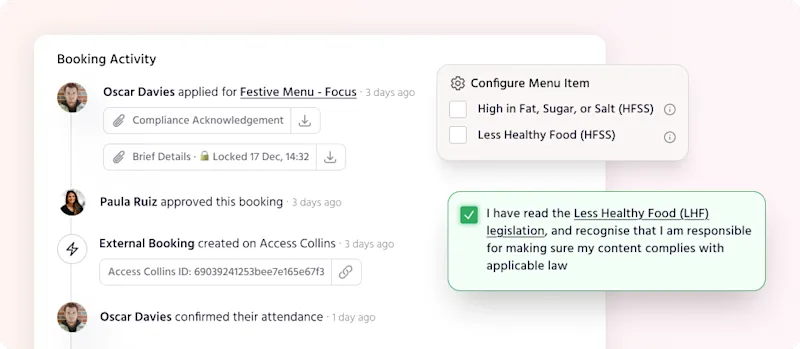
Classify your menu
Tag each menu item by category status: "not restricted," "restricted," or "check specifics." When you create a brief, restricted items are automatically excluded from dish suggestions. For groups with multiple brands or locations, you can maintain separate menus per venue with central oversight.
Your menu classification flows through to creators automatically, removing ambiguity about what can and cannot be shown.
Document your SME status
If you are relying on the SME exemption, declare your employee count in the platform. A timestamped record is created automatically. Annual reminders prompt reassessment at the start of each financial year.
Brief creators and capture acknowledgment
Briefing templates include sections for specifying which dishes can and cannot be shown, linked to your menu classification. Mandatory fields ensure compliance information is included.
Creators complete compliance training covering the rules in this guide before they can accept collaborations. Before starting any collaboration, they confirm they have read and agree to follow the brief. The acknowledgement is timestamped and recorded.
Review content before it goes live
For all paid collaborations, Creators submit content through the platform before posting. You can review, approve, request changes, or reject. Content is not posted without sign-off. Every revision request and approval is logged with timestamps and approver names.
Maintain a complete audit trail
If the ASA investigates, you need to demonstrate what instructions were given and what oversight you had. Joli locks and timestamps the brief at the point of application, creating a fixed record of the guidance provided. Every subsequent step (acknowledgements, revision requests, and approvals) is logged with timestamps. You can export full booking history as PDF or CSV.
Commission content for your own channels
Content commissioned for your own channels is not restricted because you are paying for content creation, not placement (see Section 4). Ad Studio allows you to commission creators to produce content for your social accounts using the same review and approval workflow, with a full audit trail.
Contractual compliance
All Joli creators agree to terms requiring compliance with ASA rules, including the less healthy food advertising restrictions. A signed agreement is on file for each creator.
"The ASA will have regard to underlying contractual arrangements between the party paying for an advertisement and others involved in its preparation and publication." — ASA Guidance (Section 6.3.7)
What changes with Joli
| Requirement | Without Joli | With Joli |
Classify menu items | Spreadsheet, updated manually | Menu dashboard with category tagging |
Document SME status | HR document, stored separately | Timestamped declaration in platform |
Brief creators | Email or document | Structured briefs with compliance fields, linked to menu classification |
Capture acknowledgment | Reply email "yes I agree" | Timestamped acknowledgment before start |
Review content | WhatsApp or email | In-platform submission and approval |
Audit trail | Reconstruct from emails | Exportable audit log on every booking |
Creator knowledge | Assume they know the rules | Compliance training with certification |
Contractual terms | Separate agreement per creator | Platform T&Cs requiring ASA compliance |
Learn more
- Book a demo: joliapp.com/book-a-demo
- Contact: hello@joliapp.com
- ASA Guidance: Less healthy food advertising restrictions
- CDRC NPM Calculator: Nutrient profiling tool
7. What Happens If You Get It Wrong
The consequences of non-compliance are real but proportionate. The ASA's primary tools are public rulings and requiring ads to be withdrawn, not fines or criminal penalties. However, enforcement comes from multiple directions: the ASA, Ofcom, and the platforms themselves. Proper processes are your best protection.
Who enforces
| Body | Role | Powers |
| ASA | Frontline enforcement: handles complaints, investigates, publishes rulings | Public rulings, require withdrawal |
| Ofcom | Statutory backstop: steps in if you ignore the ASA | Civil sanctions, fines |
| Platforms | Independent enforcement: review ads, remove content | Reject ads, remove content, suspend accounts |
The ASA is the UK's advertising regulator and handles day-to-day enforcement. They are designated as the "appropriate regulatory authority" for these restrictions (ASA Guidance, Section 3.3.2). It is the same body that handles complaints about misleading claims and influencer disclosure.
Ofcom (the Office of Communications) has overall statutory responsibility but only steps in if you refuse to cooperate with the ASA, for example by ignoring correspondence, refusing to comply with a ruling, or failing to provide information. For businesses acting in good faith, you will only deal with the ASA.
Social Media Platforms enforce independently, just as they do for alcohol and gambling. For many advertisers, platform enforcement is the first thing they encounter because an ad gets rejected before the ASA is ever involved.
"Under these arrangements, Ofcom retains statutory backstop powers. These may be used, for instance, where a party does not co-operate with the ASA, including by failing to comply with an ASA ruling, or failing to provide information." — ASA Guidance (Section 3.2.2)
Paid social and display ads
Enforcement happens at two levels: platforms and the ASA.
Platform review: platforms review ads before and during campaigns. Your ad might be rejected at submission or pulled mid-flight. This is how platforms already handle alcohol and gambling, and you should expect the same here. Platforms are introducing their own measures, such as age-gating. Check current policies for each platform before launching.
ASA complaints: anyone can complain, including competitors, members of the public, and health campaigners. If the ASA investigates, they will request the creative, targeting settings, and compliance documentation. If you are found in breach, the ruling is published and your brand is named.
Creator and influencer content
Two separate enforcement processes apply to creator content.
Platform removal: platforms may flag or remove content on creator channels. If this happens, the creator deals with it because it is their account. You cannot appeal on their behalf. This is where your brief and their acknowledgment matter, as documentation makes their appeal straightforward.
ASA investigation: if someone complains about creator content, the ASA contacts you, not the creator. You are the advertiser who paid or provided the free meal, so you respond to the investigation, provide documentation, and if there is a ruling, your brand is named.
These processes are independent. A platform might remove content without the ASA ever being involved. Or the ASA might investigate content the platform never flagged.
Other platforms
The rules apply to any paid placement. Standard unpaid listings are not restricted; only sponsored or promoted placements are in scope.
| Platform type | Examples | In scope? |
Delivery platforms | Deliveroo, Uber Eats, Just Eat | Sponsored listings: Yes |
Booking platforms | OpenTable, Resy, TheFork | Promoted listings: Yes |
Review/travel sites | Tripadvisor, Booking.com | Sponsored placements: Yes |
Local search | Google Maps, Bing Places | Promoted pins: Yes |
Deliveroo already requires you to tag less healthy items in their menu manager, excluding them from sponsored placements automatically. Speak to your account manager on each platform about their specific requirements.
Disputing a decision
Platform appeals: each platform has its own process. TikTok offers one appeal per ad group via Ads Manager. Meta has a "Request Review" button with human reviewers, typically responding within 24 hours. Google accepts appeals via support. Most platforms allow one appeal per rejection, so make it count with clear documentation.
ASA appeals: you have 21 days to request review by the Independent Reviewer. You must show additional evidence that was not available, or a substantial flaw in the ASA's process. The request must be signed by your CEO or equivalent. Judicial review is technically possible but expensive and rarely successful.
ASA appeals processes and requirements are set by the ASA and may change. Check current ASA procedures before relying on this information.
What there isn't
There are no direct fines from the ASA for first breaches. There are no criminal penalties. The ASA's tools are public rulings and requiring withdrawal, which carry reputational consequences rather than financial ones.
Ofcom can escalate to civil sanctions, but only for serious cases where advertisers refuse to cooperate. For businesses acting in good faith, this will not apply.
The real risks
| Risk type | What happens |
| Reputational | Public ruling names your brand; trade press coverage; increased scrutiny on future campaigns |
| Commercial | Campaigns pulled mid-flight; wasted media spend; creators wary of working with you; ad account standing affected |
| Operational | Time responding to investigations; explaining to leadership |
Why documentation matters
Documentation will not guarantee you avoid a ruling. If your content featured a restricted product, a good process does not change that. However, it demonstrates you were not reckless, and the ASA considers cooperation when assessing outcomes. First-time, unintentional breaches are treated differently from repeat offenders.
If the ASA contacts you, respond promptly. Provide what they request. Do not ignore their correspondence.
For every campaign, keep the brief or creative, when it was sent, any creator acknowledgment, content submitted for review, revision requests, final approval (who and when), and where and when it was posted. Timestamped records in one place are far more useful than scattered email threads.
8. Compliance Checklist
Use this checklist to prepare for the restrictions coming into force on 5 January 2026.
Confirm your status
- Check employee count on the first day of your financial year
- Include all staff: UK, international, franchisees, part-time
- Document formally (HR record, board minute, or signed declaration)
- Store securely and accessibly
- Set annual reminder to reassess
Review your menu
- Identify items in the 13 regulated categories
- Flag restricted items (burgers, pizzas, fried chicken, chips, desserts, sugary drinks)
- Create list of safe items (grilled meats, fish, pasta, curries, salads)
- Share with marketing team, agencies, and creators
Audit paid advertising
Social media and display:- List all paid social campaigns (Meta, TikTok, YouTube)
- List all Google Display / programmatic campaigns
- List all boosted posts
- Check each for identifiable less healthy products
- Check current ad policies for each platform (including any age restrictions)
- Meta: review current policies for HFSS or equivalent requirements
- Google: review current policies for HFSS or equivalent requirements
- List sponsored listings on Deliveroo, Uber Eats, Just Eat
- Tag less healthy items in each platform's menu manager
- Upload compliant images for promoted placements
- List promoted listings on OpenTable, Resy, TheFork
- Check if listings feature less healthy products
- List promoted listings on Tripadvisor, Booking.com
- Review imagery for less healthy products
- Check Google Maps promoted pins and Local Services Ads
- Check Apple Business Connect and Bing Places promotions
Set up influencer processes
Briefing:- Create compliant briefing template
- Specify what can and cannot be shown
- Link to your menu classification
- Require timestamped acknowledgment before collaboration starts
- Store on booking record
- Set up content review before posting
- Create approval workflow with named approver
- Log revision requests and responses
- Include compliance clauses
- Include right to review and reject content
Documentation
- Keep all briefs sent to creators
- Keep creator acknowledgments (timestamped)
- Keep content submitted for review
- Keep revision requests and responses
- Keep final approvals (timestamped, with approver name)
- Keep copies of posted content
- Export records regularly
- Ensure records are accessible if ASA requests them
Train your team
- Brief marketing team on the new rules
- Brief social media managers on boosting restrictions
- Brief anyone working with influencers or agencies
- Create internal quick-reference guide
- Identify who handles escalations
Before every campaign
- Does this feature identifiable less healthy products?
- Are we paying for placement?
- If yes to both: adjust the creative or don't run it
- Before boosting: check content doesn't feature restricted products
If you use Joli
- Complete SME Declaration in platform
- Tag menu items by restriction status
- Use compliant briefing templates
- Check creators have completed compliance training
- Use content review workflow for all collaborations
- Export booking history for compliance records


